

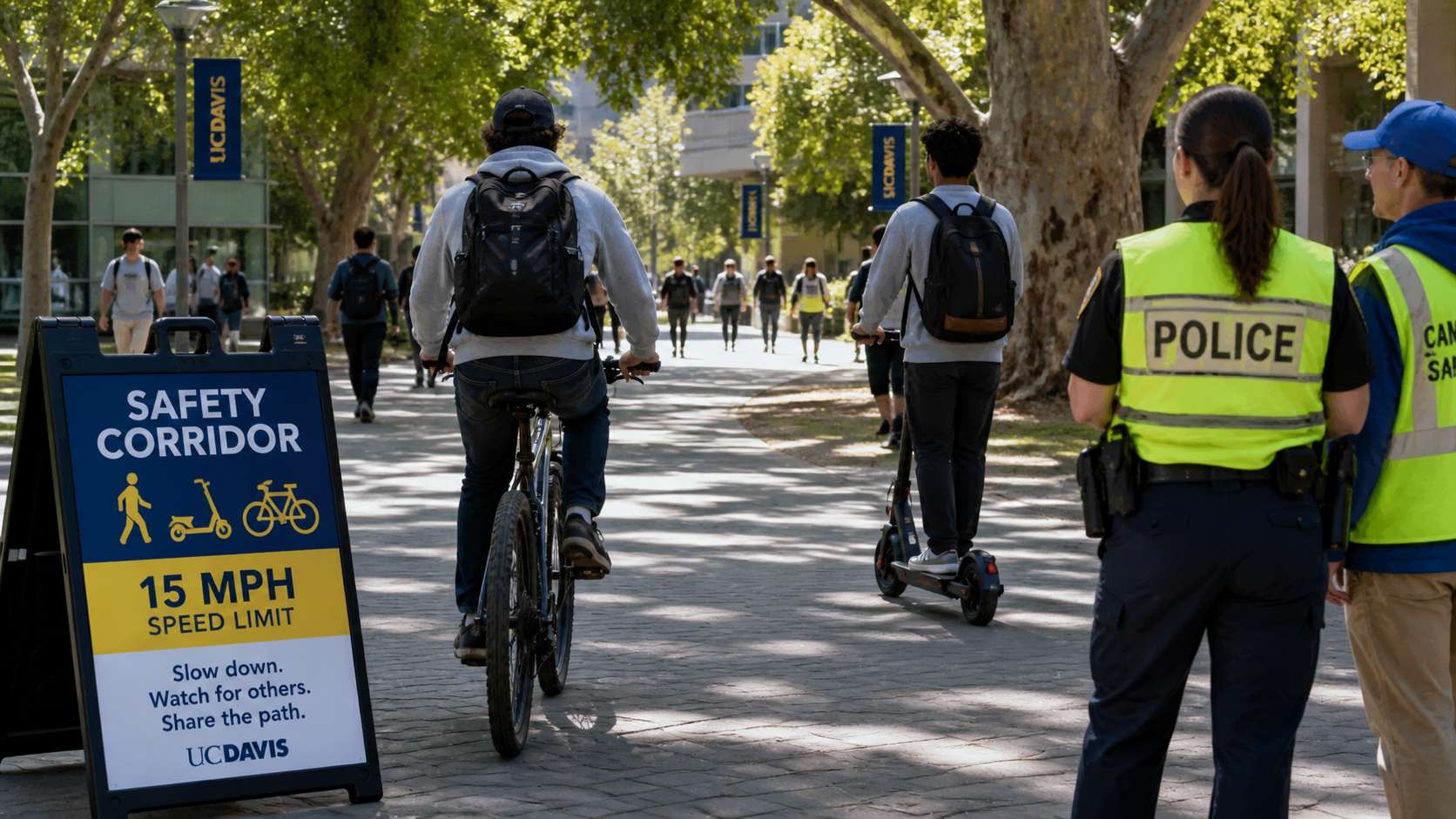
UC Davis has started a month-long Safety Corridors program to slow down risky e-scooter, e-bike and bicycle riding on campus. The pilot focuses on busy paths and intersections where students, staff, walkers and riders cross paths every day.
The message is direct: slow down, follow signs, yield to people walking and keep campus travel safe.
For May, UC Davis Transportation Services is placing safety teams at key campus spots on Thursdays. These teams will talk with riders who break campus rules or ride in a way that puts others at risk. For now, the program uses education first. Staff will not collect IDs, and riders will not receive citations during this first phase.
That softer start matters. The goal is not to scare students away from bikes or scooters. Instead, UC Davis wants riders to understand the rules before someone gets hurt.
Why UC Davis Is Acting Now
UC Davis has one of the strongest bike cultures in the country. Students ride to class, staff commute by bike, and many visitors move through campus without a car. Now, e-scooters and e-bikes have added a new layer to that daily traffic.
That growth brings clear benefits. Riders save time. They avoid parking stress. They cut short car trips. But faster devices also create new safety problems in crowded spaces.
UC Davis says scooter-related crashes on campus have increased over the past 15 months. That rise helps explain why the university is testing Safety Corridors now. The campus already has many people moving in different ways, so even one rider going too fast can create trouble near a crosswalk, roundabout or bus stop.
This issue reaches beyond California too. Many college towns now face the same problem. For example, e-bikes and e-scooters are everywhere in Iowa City, and local leaders say the rules need to catch up. UC Davis is now trying to get ahead of the same kind of conflict with a focused campus safety push.
What Riders Will See on Campus
Students and commuters will see two-person teams in high-visibility vests. Each team includes one UC Davis Police Department Campus Safety Specialist and one representative from Transportation Services or Student Affairs.
These teams will stand in busy campus areas and watch for unsafe riding. Then, they will stop riders for a short safety conversation. They will also hand out notices that explain the rule that was broken.
For now, the tone is educational. That means riders get a warning and a clear reminder. Still, UC Davis has left the door open for stronger action later. The university says future steps can include formal compliance measures and fines.
So, riders should treat this pilot as a real warning. The first month gives everyone time to adjust. After that, campus leaders will have a better picture of where problems happen and what kind of response works.
The 15 MPH Campus Speed Limit
The main rule is simple. Riders must stay at or below 15 mph in the restricted campus core and on off-street bike paths.
That number matters more than some riders think. At 15 mph, a person on a scooter or bike still moves fast enough to cross campus quickly. Yet the rider has more time to brake, turn or react to someone stepping into a path.
Speed becomes more dangerous near class changes. Paths fill quickly. People cross without much warning. Bikes turn into intersections. Scooters pass from behind. Then, one fast rider can force several people to move at once.
UC Davis points to SPIN scooters as a useful speed example, since those scooters are limited to 15 mph on campus. Riders on personal e-scooters and e-bikes should use that pace as a guide.
Rules UC Davis Wants Riders to Follow
The Safety Corridors pilot targets unsafe habits that campus riders often see but sometimes ignore.
UC Davis wants riders to stop at stop signs and traffic signals. Riders must yield to pedestrians in crosswalks. They should stay off sidewalks where signs do not allow riding. They also need to avoid wrong-way riding, unsafe passing and tandem riding.
The university is also watching for missing lights, missing reflectors and unsafe headphone use. The headphone rule is easy to remember: keep one ear open or ride without headphones.
These rules are not complicated. Still, they matter in real campus traffic. A rider with both ears covered can miss a warning shout. A scooter without lights becomes hard to see near dusk. A cyclist passing too close can push another rider into a bad position.
How Students Can Ride Safer This Month
Riders do not need special gear or training to make campus safer. They need better habits.
Slow down before crossings. Look both ways before entering an intersection. Stop fully at posted signs. Give walkers room. Keep both hands ready. Put the phone away. Use lights after dark. Wear a helmet, even for short trips.
Then, think about the path ahead. If a walkway looks crowded, reduce speed early. If someone seems unsure at a crossing, yield. If another rider moves unpredictably, leave extra space.
Small choices add up fast on a busy campus. One rider slowing down can prevent a chain reaction. One rider stopping at a sign can make a crossing feel safer for everyone nearby.
Why Education Comes Before Fines
UC Davis chose an education-first pilot for a practical reason. Many riders break rules out of habit, not intent. Some students do not know where scooters can ride. Others misjudge speed. Some think stop signs do not apply on bike paths.
So, the first step is direct contact. A staff member can explain the rule in the exact place where the problem happened. That makes the message harder to ignore.
At the same time, the pilot gives UC Davis useful field data. Staff can see where riders speed, where signs get missed and where path design confuses people. That information can guide later changes to signs, enforcement and campus planning.
A Bigger Push for Safer Campus Travel
The Safety Corridors program fits into a broader UC Davis effort to improve campus transportation. The university is also reviewing its Moving Forward Together transportation plan, which looks at safer walking, biking, transit and campus circulation.
That broader work matters. Enforcement alone cannot fix every problem. Better crossings, clearer routes, improved signs and smarter parking for scooters and bikes can all reduce risk.
Still, rider behavior plays a major role. A safer path does not work if people ignore stop signs. A clear speed limit does not help if riders treat it like a suggestion. So UC Davis needs both better design and better daily habits.
What This Means for E-Scooter and Bike Riders
For students, the message is simple. UC Davis wants bikes, e-bikes and e-scooters to remain useful. But the campus also wants riders to share space with care.
The Safety Corridors pilot does not ban scooters. It does not punish riders during the education phase. Instead, it gives riders a clear chance to slow down and follow the rules before stronger action arrives.
For May, riders should expect more visible safety checks in busy areas. They should also expect direct reminders about speed, stop signs, sidewalks, headphones and crosswalks.
That is a fair trade. Scooters and bikes help people move around campus without cars. So, riders need to show that they can use those devices safely in crowded spaces.
UC Davis is sending that message now, before the next crash becomes the reason for tougher rules.