

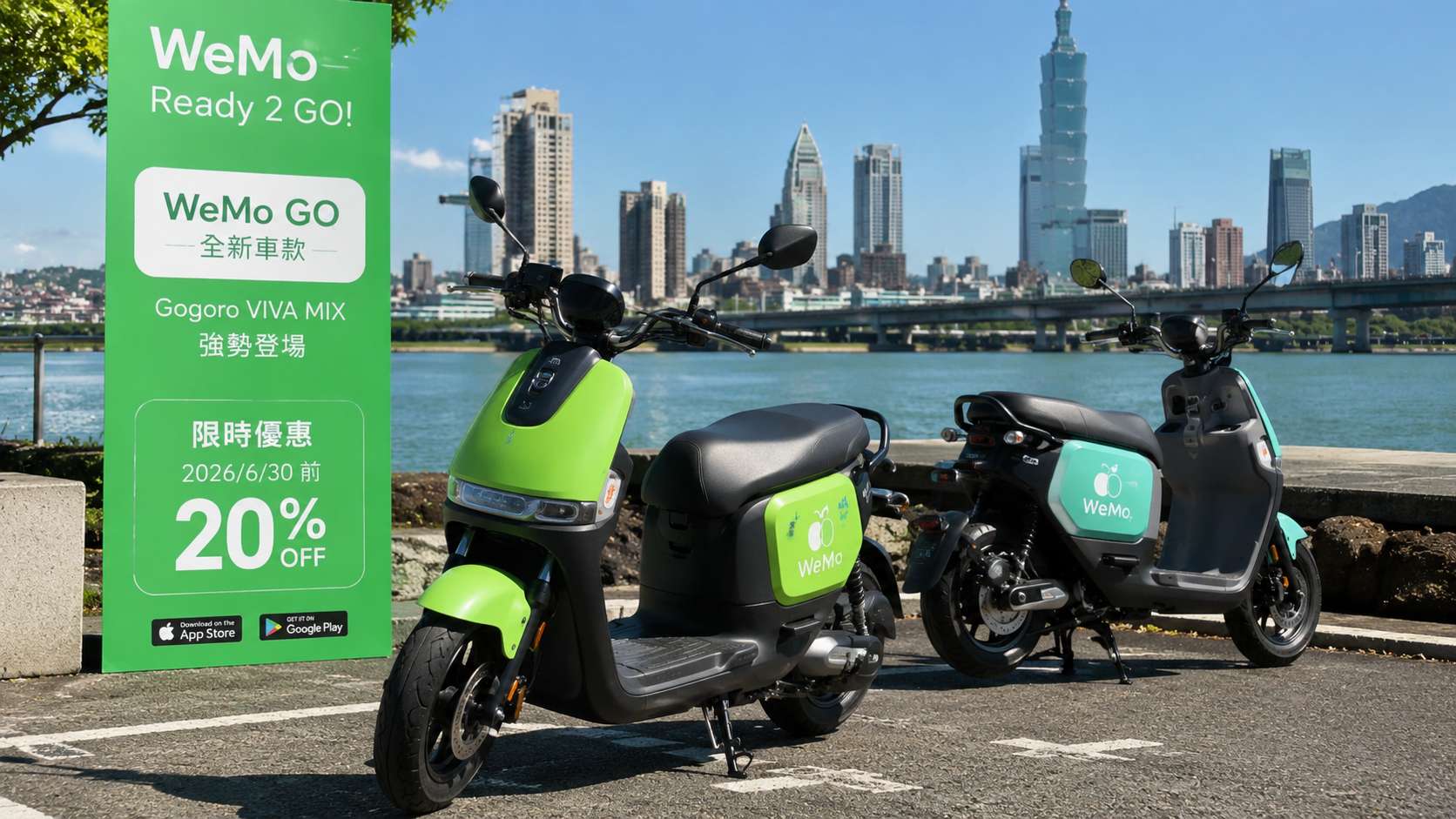
WeMo has introduced WeMo GO, a new electric scooter-sharing service that adds Gogoro VIVA MIX scooters to its rental fleet in Taiwan. The launch gives riders two choices in one app: WeMo Fly for light city trips and WeMo GO for stronger rides across longer urban routes.
The new service arrived through the WeMo Ready 2 GO campaign, and it marks a clear shift for the company. WeMo no longer serves only quick, short-distance scooter trips. It now wants to cover daily commutes, rail station transfers, local tourism, and longer city rides.
This move comes at a good time. Taiwan keeps pushing cleaner transport, and shared electric scooters fit that plan well. Riders already know the pain of fuel costs, parking pressure, and busy streets. Shared scooters do not fix every transport problem, but they give people one more practical option.
WeMo GO adds a stronger scooter to the app
WeMo GO uses the Gogoro VIVA MIX platform. That makes it different from WeMo Fly, which serves as the lighter green-plate option in the fleet. WeMo GO gives riders a white-plate scooter for routes that need more power and more road presence.
For many users, this will feel like a simple upgrade. The scooter has a larger body, stronger acceleration, and a more stable feel than a small city scooter. It suits riders who need to travel across Taipei, reach a train station, or take a longer trip without switching transport.
The service is starting in Greater Taipei and Penghu. Riders can find WeMo GO scooters inside the WeMo app, where the map shows vehicle type and location. That detail matters, since users now need to choose the right scooter before they start a ride.
WeMo Fly still has a clear role. It works well for short errands, nearby metro trips, and quick rides through dense city areas. WeMo GO takes the next step. It gives riders more comfort for longer routes.
New pricing and launch offers
WeMo GO starts at NT$30 for the first 6 minutes. After that, the ride costs NT$3 per minute. During the launch period, WeMo is offering a 20% discount on WeMo GO rides until June 30, 2026.
That discount lowers the starting price to NT$24. It also drops the per-minute rate to NT$2.4 during the campaign. For regular riders, that can make a real difference across a full month of short trips.
WeMo is using the launch to promote WeMo PASS too. First-time WeMo PASS users can enter the code “GO” for a free one-month trial. The plan includes three NT$60 ride coupons each month. It also gives riders 3 minutes of free preparation time before paid rental time starts.
That prep time is useful. Riders often need a minute to check the scooter, put on a helmet, adjust their bag, and confirm the route. Those small steps feel better without the meter running right away.
Why the dual-scooter model matters
The big change is not only the new scooter. The bigger story is WeMo’s dual-scooter model. Riders can now pick the scooter that fits the trip, not just the nearest scooter on the map.
A short ride to a café or grocery store still fits WeMo Fly. A ride across the city fits WeMo GO better. That choice helps users spend less and ride with more comfort.
It also helps WeMo serve more types of riders. Office workers, students, tourists, and train passengers all use shared scooters in different ways. A mixed fleet gives each group a better match.
The company is growing its fleet too. Reports from the launch point to more than 11,000 scooters after WeMo GO joins the network. The plan includes about 3,000 WeMo GO scooters and around 8,000 WeMo Fly scooters.
That scale gives WeMo more reach in Taiwan’s shared electric scooter market. It also puts more pressure on rival services, since riders often choose the app with the nearest available vehicle.
Cross-platform access is planned by 2026
WeMo is planning wider app access by the end of 2026. The company wants WeMo rentals to appear through other platforms, including Autopass, iRent, iPASS MONEY, and LINE GO.
This matters for first-time riders. Many people do not want to download one more app for one short trip. Cross-platform access can place WeMo scooters inside apps that people already use for payment, parking, car rental, or transport planning.
That can help tourists too. A visitor who already uses LINE GO or a payment app has a lower barrier to try scooter sharing. Local riders gain from the same idea. They can find a scooter faster and pay through a familiar platform.
Taiwan Mobile and USPACE are expected to join the wider access plan in 2027. That gives WeMo another path into parking, mobility, and charging services. It also supports Taiwan’s broader shift away from gas-powered scooters and cars. ScooterPick recently covered how Taiwan paid riders to ditch gas scooters and cars, and WeMo GO fits that same clean transport trend.
Better fit for rail stations and local travel
WeMo is also building stronger links with Taiwan’s rail network. The company has been expanding same-station return points and transport hubs, which makes shared scooters more useful after train trips.
This is important for last-mile travel. A train can take riders across a city or region, but the final 1 to 5 kilometers often remain annoying. Buses can take longer. Taxis cost more. Walking is not always realistic.
A shared scooter fills that gap. Riders can leave a station, open the app, grab a nearby scooter, and finish the trip at street level. For short tourism routes, this can make the day feel easier.
Penghu adds another angle. Island travel often needs flexible local transport. WeMo GO can serve visitors who want a cleaner rental option without booking a private scooter shop in advance.
What riders should check before their first WeMo GO trip
WeMo GO rides still start inside the app. Riders need to find a scooter, check the battery, reserve it, unlock it, and return it inside the approved service area.
Before starting, riders should check a few basics:
- Battery level and estimated range
- Helmet availability
- Scooter body condition
- Brake feel
- Turn signals and lights
- Legal parking rules near the destination
The scooter can enter a limited mode when the battery gets low. Riders should watch the battery level and swap batteries where supported. That helps prevent slow rides or trip interruptions.
Parking still matters too. Shared scooters work best when riders return them in legal spaces and avoid blocking sidewalks, ramps, or building entrances. Poor parking creates complaints and can hurt public support for scooter-sharing services.
WeMo GO could make scooter sharing easier to use
WeMo GO gives Taiwan riders a more flexible scooter-sharing option. The new Gogoro-based model adds power, comfort, and better fit for longer trips. At the same time, WeMo Fly stays useful for short city rides.
The real value comes from choice. Riders can match the scooter to the route, the price, and the time they have. The planned cross-platform access makes the service easier to find, especially for people who already use transport and payment apps every day.
For 2026, WeMo’s plan looks clear: more scooters, more app access, and stronger links with public transport. That can make shared electric scooters a more common part of daily travel in Taiwan.