

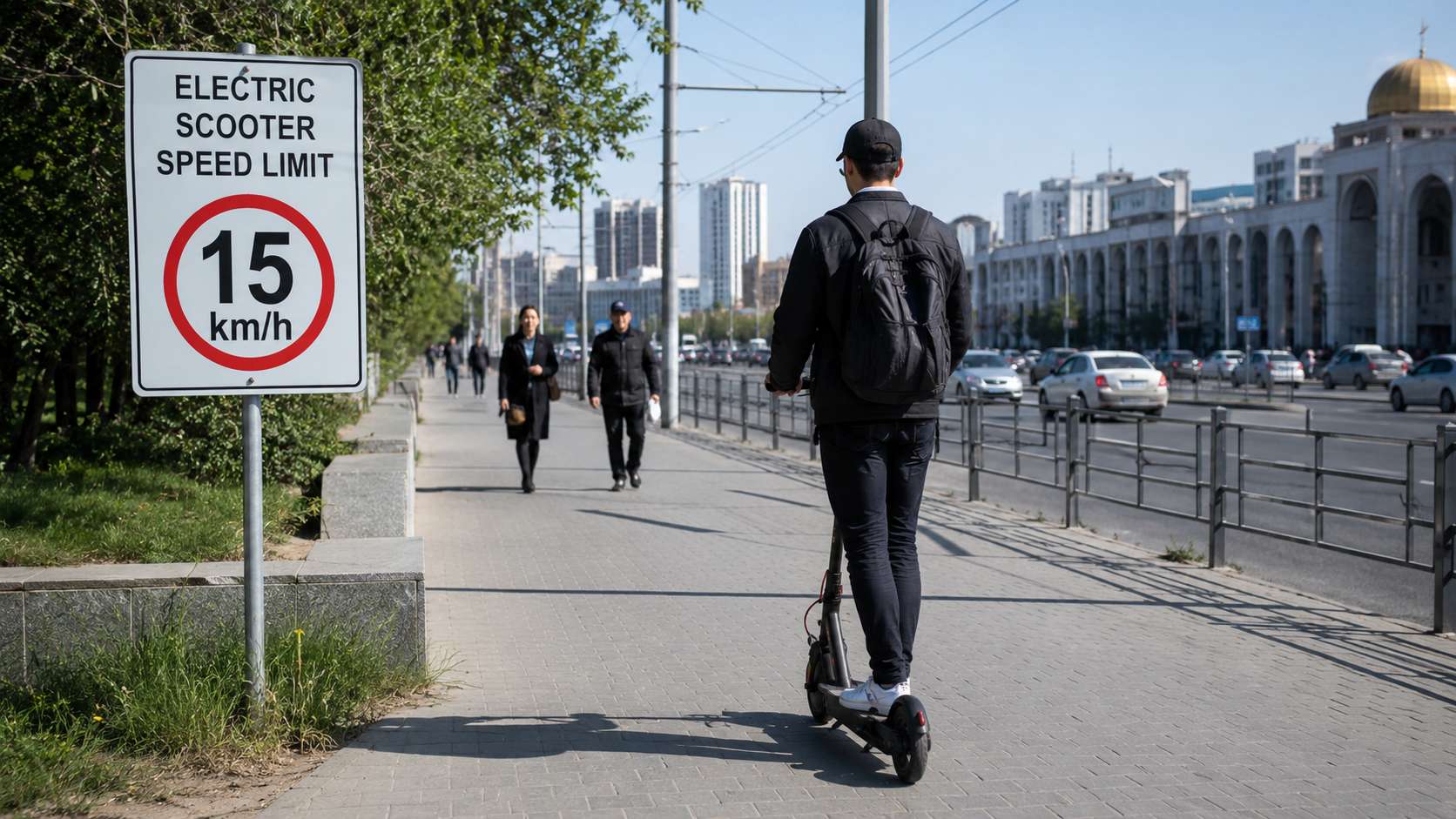
Bishkek looks at a lower electric scooter speed limit
Bishkek authorities are considering a lower speed limit for electric scooters, and the proposed number is 15 km/h. The idea comes as more residents complain about fast scooters on sidewalks, unsafe riding, and blocked pedestrian areas across the city.
The proposal was raised by Bishkek Mayor Aibek Junushaliev during a meeting with residents of Leninsky district. At that meeting, people spoke about road safety, sidewalks, public transport, and the growing problem of personal mobility devices in busy parts of the city.
For many residents, the issue is not electric scooters themselves. It is how they are used. Scooters can help people move around without a car, and they can make short trips easier. Still, when riders move too fast near pedestrians, the whole idea starts to feel less safe.
That is why the 15 km/h proposal matters. It gives the city a clear way to slow things down before scooter use becomes harder to manage.
Why Bishkek wants stricter scooter rules
Electric scooters have become a normal sight in Bishkek. People use them for quick trips, short commutes, and rides between public transport stops. They are easy to rent, simple to park, and often cheaper than taking a car for a short journey.
Still, the growth has brought new problems. Residents say some riders use sidewalks like roads. Others pass too close to pedestrians, ignore crossings, or leave scooters where they block ramps and entrances.
So, the city now faces a common urban problem: how do you keep scooters useful without making sidewalks feel dangerous?
A lower speed limit may be one answer. At 15 km/h, riders can still move faster than walking pace, but they have more time to brake. Pedestrians also get more time to react. That difference matters near bus stops, schools, parks, markets, and apartment blocks.
The debate in Bishkek is similar to other local scooter debates around the world. For example, some towns are looking at stronger sidewalk restrictions, including rules like the Pittsford bike, e-bike, and e-scooter sidewalk ban proposal. The details differ from city to city, but the main concern stays the same: pedestrians want safer walking space.
Current rules already include a 25 km/h limiter
Bishkek already has rules for electric scooters and other personal mobility devices. Current requirements include safety features such as lights, reflectors, brake lights, registration markings, and a built-in speed limiter of up to 25 km/h.
Now, the city is looking at a stricter limit for real-world use. A move from 25 km/h to 15 km/h would be a big change for rental scooter operators and riders.
For a rider, the difference is easy to feel. At 25 km/h, a scooter can feel quick on a narrow path. At 15 km/h, the ride feels calmer and more controlled. That slower pace may be less exciting, but it fits better in crowded areas.
For pedestrians, the change could make sidewalks feel more predictable. A slower scooter is less likely to surprise someone from behind. It also reduces the force of a crash if something goes wrong.
What riders in Bishkek may notice
If Bishkek moves ahead with the 15 km/h scooter limit, riders may notice slower speeds inside rental apps. Operators can usually adjust speed settings remotely, so rental scooters may become easier to control than privately owned scooters.
Riders may also see more attention from city officials and traffic police. That could include checks in busy areas, tighter parking rules, and more limits in pedestrian zones.
The biggest changes may include:
- Lower app-based speed caps for rental scooters
- More no-ride or slow-ride zones
- Clearer parking rules near sidewalks and entrances
- More checks on scooter operators
- Stronger focus on pedestrian safety
- Better rules for where scooters can and cannot travel
These changes would not remove scooters from the city. Instead, they would try to make scooter use more orderly.
Why sidewalk safety is the center of the debate
Most complaints about scooters start on sidewalks. That makes sense. Sidewalks are designed for walking, not fast traffic.
A parent pushing a stroller, an older resident, or a person with limited mobility cannot always move out of the way quickly. Children also make sudden moves. Near schools, parks, and crossings, a fast scooter can create a real risk even before a crash happens.
That is why speed matters so much. A rider at 15 km/h has more time to slow down. The scooter also needs less distance to stop. In crowded areas, that extra reaction time can prevent injuries.
Still, speed is only one part of the issue. Bad parking also creates problems. A scooter left across a ramp can block wheelchair users. A scooter parked at an entrance can force people into the street. So, any serious scooter rule should cover both riding and parking.
What rental scooter operators may need to change
Rental companies may need to adjust quickly if the city approves a lower speed limit. The most direct fix is software-based speed control. Apps can limit speed in certain areas, block rides in restricted zones, and guide users toward approved parking spots.
Operators may also need to improve how they handle complaints. If residents report scooters blocking sidewalks, companies should move them quickly. If riders break rules often, accounts may need warnings or temporary blocks.
A good operator system should include:
- Built-in speed control
- Clear parking zones
- Fast response to blocked sidewalks
- Rider education inside the app
- Safety reminders before each trip
- Better data sharing with city authorities
These steps can make scooters easier to accept. They also help operators avoid tougher restrictions later.
What the city still needs to solve
A 15 km/h speed limit can help, but it will not fix every problem on its own. Bishkek also needs clear routes for scooter riders. Without bike lanes or marked paths, riders will keep switching between roads and sidewalks.
That creates confusion. Pedestrians do not know where scooters will appear. Drivers do not always expect scooters on the road. Riders also feel unsafe in traffic, so they move back to sidewalks.
A better system needs simple rules that everyone can understand. Riders should know where to ride. Pedestrians should know where they can walk without worry. Drivers should know how to share the road.
Clear signs, road markings, safe crossings, and better parking areas would make the 15 km/h rule much easier to follow.
How riders can stay safer now
The final decision has not been announced yet, but riders should already act like stricter rules are coming. That means slower riding, better parking, and more care near pedestrians.
Here are smart habits for scooter users in Bishkek:
- Slow down near people
- Avoid crowded sidewalks when possible
- Use bike lanes where they exist
- Do not ride with a passenger
- Keep both hands on the handlebars
- Walk the scooter through very busy areas
- Park away from ramps, doors, and crossings
- Watch for children and older pedestrians
- Follow traffic signs and police instructions
These habits protect everyone. They also show that scooters can be part of city transport without becoming a daily problem.
What happens next for Bishkek scooters
Bishkek has not made a final citywide 15 km/h electric scooter rule yet. The proposal is under review, and officials are still working through how scooter movement, speed, and operator duties should be controlled.
Even so, the direction is clear. The city wants safer scooter use, calmer sidewalks, and stronger rules for personal mobility devices.
For riders, the message is simple: slow down before the rules force you to. For operators, the next step is better control over speed, parking, and rider behavior. For pedestrians, the proposal could bring more comfortable sidewalks in the parts of Bishkek where scooters now feel too fast and too unpredictable.
Electric scooters can still help Bishkek reduce short car trips and ease some pressure on traffic. But they need rules that fit the city. A 15 km/h limit may be the first major step toward that safer balance.