

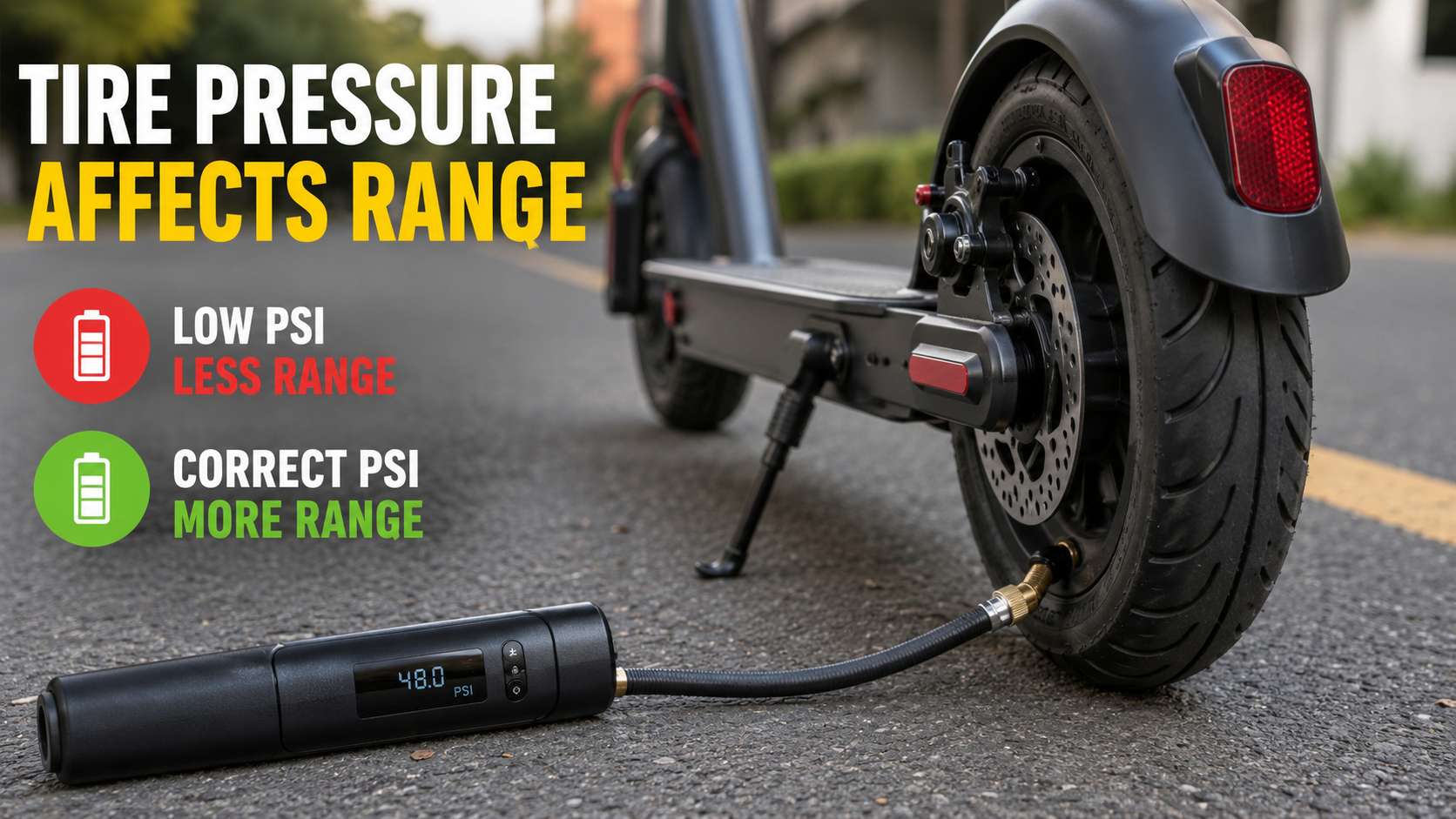
Why Tire Pressure Matters More Than Many Riders Think
Electric scooter range is not only about battery size. Tire pressure plays a big role too. A scooter with soft tires needs more power to move, so the motor pulls more energy from the battery. That extra energy use can turn a normal ride into a shorter, slower, and more frustrating trip.
A pneumatic tire changes shape every time it rolls. Some flex is good. It gives comfort, grip, and a smoother ride. Too much flex wastes energy. The tire squashes against the road, builds heat, and creates more drag. Then the scooter has to work harder just to keep the same speed.
That is why two riders with the same scooter can get very different range results. One checks tire pressure often. The other rides for weeks without looking at the valve. Soon, the second scooter feels slower, drains faster, and gets closer to a flat tire.
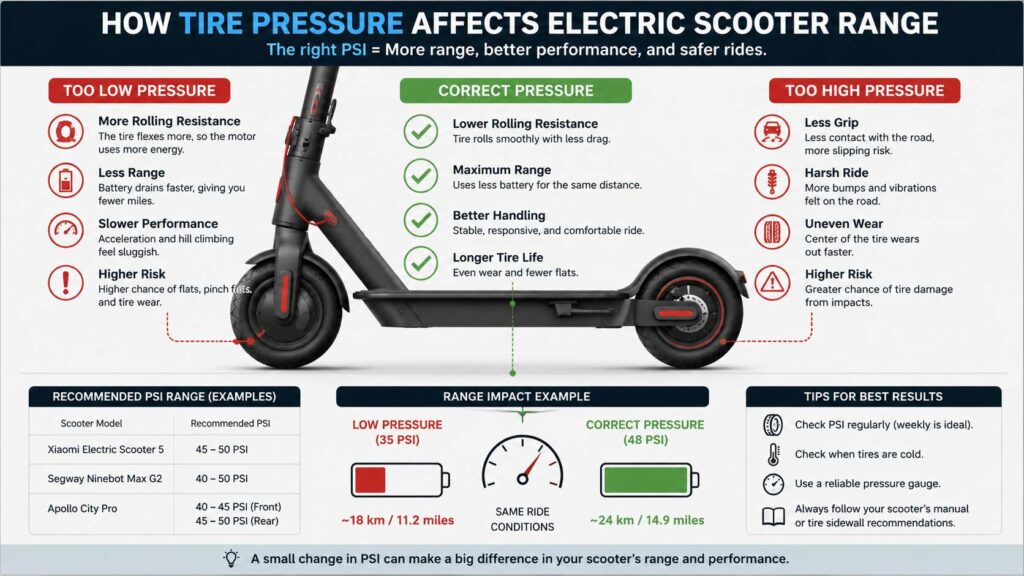
For many commuter electric scooters, the correct pressure sits somewhere around 30 to 55 PSI. Still, the right number is not the same for every model. Tire size, rider weight, scooter weight, and road surface all matter. The safest answer is always on the tire sidewall, in the manual, or on the official support page for your model.
What Happens to Range With Low Tire Pressure?
Low tire pressure increases rolling resistance. That means the tire does not roll as freely. Instead, it presses harder into the road and bends more with each wheel rotation.
At first, the scooter may still feel fine. After a few miles, the battery drop becomes easier to notice. The motor works harder from every stop. Hills feel steeper. The scooter may need more throttle to hold the same speed.
Low tire pressure can cause:
- Shorter real-world range
- Slower acceleration
- More battery drain on hills
- A softer but heavier ride feel
- More heat inside the tire
- Higher risk of flats on tubed tires
- Faster tire wear
- Less stable cornering
This matters even more on small scooter tires. A small tire has less air volume than a bicycle or car tire. So a small pressure drop can change the ride in a big way. A tire that should sit at 50 PSI can feel dull at 38 PSI, even though it still looks fine from the outside.
If your scooter range suddenly feels worse, check the tires before blaming the battery. Many riders replace chargers, worry about battery cells, or change riding modes before checking PSI. In real use, tire pressure is one of the easiest problems to miss.
Can Higher Tire Pressure Increase Scooter Range?
Yes, higher tire pressure can help range, but only inside the safe range for that tire. A firmer tire keeps its shape better. It rolls with less drag on smooth pavement. The motor then uses less energy to keep the scooter moving.
Still, more pressure is not always better. Overinflated tires can make the scooter feel harsh and nervous. The tire can bounce over cracks instead of staying planted. Grip can drop on wet roads too. Braking may feel less controlled, and the center of the tread can wear faster.
The best pressure is not the highest number you can fit into the tire. It is the correct number for your scooter, tire, rider weight, and road surface.
For smooth pavement and longer commutes, I prefer the upper half of the recommended range. That usually gives better rolling speed and better range. For rough roads, I would stay closer to the middle of the recommended range. That gives more comfort without making the scooter feel lazy.
Best PSI for Electric Scooter Range
There is no single best PSI for every electric scooter. A compact commuter scooter, a heavy dual-motor model, and a lightweight city scooter do not need the same pressure.
Use this simple method:
- Read the tire sidewall.
- Check the scooter manual.
- Check the official support page for your exact model.
- Set pressure with a proper gauge.
- Check pressure cold, before the ride.
- Recheck every 1 to 2 weeks during regular use.
Many commuter scooters run near 40 to 50 PSI. Some models need less. Some performance scooters use wider tires with different pressure ratings. A few scooters even recommend different pressure for the front and rear tire.
Do not copy a random PSI from a forum unless it matches your exact tire and model. Two scooters can both have 10-inch pneumatic tires and still need different pressure.
How Much Range Can Bad Tire Pressure Cost?
The exact range loss changes from scooter to scooter. Rider weight, speed, wind, hills, road texture, and battery age all affect the final number. Still, the pattern is clear. Lower pressure increases drag, and extra drag drains the battery faster.
Here is a simple real-world example.
A rider normally inflates both tires to 48 PSI. The scooter gets about 22 miles on a mixed commute. After a few weeks, the tires drop to 36 PSI. The scooter still rides, but it feels heavier from a stop. The same route now uses more battery, and real range can fall closer to 18 or 20 miles.
That is not a lab promise. It is the kind of change many riders notice in daily use. The loss gets worse with a heavier rider, cold weather, hills, rough pavement, or aggressive throttle use.
This is one reason official range numbers can feel too optimistic. Brands often test under controlled conditions, with a light rider, steady speed, good pavement, and proper tire pressure. Real life is messier. For a deeper look at that gap, read this guide on why electric scooter range claims often sound better than real-world results.
Rider Weight Changes the Pressure You Need
A 60 kg rider and a 100 kg rider do not load the tires the same way. More weight compresses the tire more. That creates extra flex, extra heat, and more rolling resistance.
For heavier riders, the upper part of the recommended pressure range usually makes more sense. The rear tire often needs extra attention too, since it carries much of the rider’s weight. On many scooters, the rear wheel also handles motor power and braking forces.
Cargo matters as well. A backpack, lock, groceries, delivery bag, or child seat hardware adds load. The scooter may still ride, but the tire can squat under weight.
Here is a quick test. Stand on the scooter and look at the rear tire. If it looks visibly flattened, check PSI. Do not rely only on squeezing the tire with your hand. Small scooter tires can feel firm even after losing several PSI.
Weather Can Change Tire Pressure Too
Cold weather lowers tire pressure. Hot weather raises it. That means a scooter set up well in summer can feel underinflated on a cold morning.
This becomes a bigger problem in autumn and winter. The battery already loses some performance in colder temperatures. Then the tires lose pressure too. So the scooter faces two problems at once: less battery performance and more tire drag.
That is why range often drops faster than expected in cold weather. Riders blame only the battery, but tire pressure can share the blame.
Check PSI more often during seasonal changes. A small digital gauge is worth keeping at home. A portable pump helps even more, especially if you ride daily. For a compact option, this MegaWheels mini bike pump review covers a small pump that can be useful for scooter riders who want to keep pressure under control.
Tubed Tires, Tubeless Tires, and Solid Tires
Tire type changes how pressure affects range and maintenance.
Tubed tires are common on many budget and mid-range scooters. They ride well and feel comfortable, but they need regular pressure checks. Low PSI raises the risk of pinch flats. A pinch flat happens after a hard impact, then the inner tube gets trapped between the tire and rim.
Tubeless tires do not use an inner tube. Many newer scooters use them. They can reduce some flat risks, and some have sealant or self-sealing layers. They still lose air over time, so PSI checks still matter.
Solid tires do not need air pressure. They cannot go flat from low PSI. That sounds great, but the ride usually feels harsher. Grip can feel worse on wet or rough pavement too. Solid tires give less maintenance, but many riders prefer pneumatic tires for comfort and control.
For range, a properly inflated pneumatic tire usually gives the best mix of rolling speed, grip, and ride quality.
Common Tire Pressure Problems Riders Run Into
The most common problem is air loss during pump removal. Scooter valves are often short and awkward. You inflate the tire to 50 PSI, unscrew the pump hose, and hear air leak out. Now the tire may sit several PSI below target.
A valve extender can help. A pump with a quick-release head can help more. Some riders inflate 1 or 2 PSI above the target, then remove the hose quickly. After that, they recheck with a gauge.
Another common issue is a bad pump gauge. Cheap gauges can be inaccurate. If range matters to you, use a separate digital gauge. It gives a clearer reading and helps you spot slow leaks early.
Valve caps matter too. They do not hold the main air pressure, but they keep dirt out of the valve. Dirt can cause slow leaks or valve problems. Replace missing caps when you notice them.
How to Check Scooter Tire Pressure Properly
A good tire pressure routine takes only a few minutes.
Use these steps:
- Let the scooter sit before checking pressure.
- Find the recommended PSI for your exact tire.
- Remove the valve cap.
- Attach the pump firmly.
- Inflate slowly.
- Check the reading with a gauge.
- Remove the pump in one clean movement.
- Recheck pressure after removal.
- Put the valve cap back on.
- Repeat the process on the second tire.
Check pressure before long rides. Check it after storage. Check it after a pothole hit. Check it any time the scooter feels slower, heavier, or less stable than normal.
For daily commuters, weekly pressure checks make sense. For casual riders, every 2 to 4 weeks is still better than waiting until the tire looks flat.
Tire Pressure and Ride Comfort
Tire pressure does not only change range. It changes comfort, grip, braking, and steering.
A soft tire can feel smooth at low speed. Still, it can feel vague during turns. It can move around under braking. It can heat up on longer rides too.
A hard tire rolls faster on clean pavement. At the same time, it can feel rough over cracks and broken asphalt. It can bounce over small bumps, and that can hurt control.
The best setup feels firm but not harsh. The scooter should roll freely, corner predictably, and brake without the tire squirming. That balance matters more than chasing one extra mile of range.
Wet roads need extra care. Do not overinflate just to gain range before riding in rain. Grip and braking control matter more.
Real Opinion: Tire Pressure Is the Cheapest Range Fix
Many riders look for expensive upgrades before checking the basics. A new battery costs money. A new controller takes work. New tires take time. Tire pressure takes a few minutes.
That is why PSI should be the first thing you check after a sudden range drop. It is simple, fast, and often solves more than expected.
I would not trust any scooter range test without knowing the tire pressure first. The same scooter can feel completely different at 35 PSI and 50 PSI. One setup feels slow and heavy. The other feels sharper, smoother, and easier to ride.
For me, a small pump and gauge are just as useful as a charger. They help protect range, reduce flats, and keep the scooter feeling right.
Final Verdict
Tire pressure changes electric scooter range by changing rolling resistance. Low pressure makes the tire flex more, so the motor works harder and the battery drains faster. Correct pressure helps the scooter roll better, climb more easily, and use less energy on the same route.
For the best result, check the tire or manual, set the correct PSI, and adjust within the safe range for rider weight and road surface. Do not ride for weeks without checking pressure. A few lost PSI can cost real miles.
Good tire pressure will not turn a small battery into a huge one. Still, it can help you get the range your scooter was meant to deliver.