

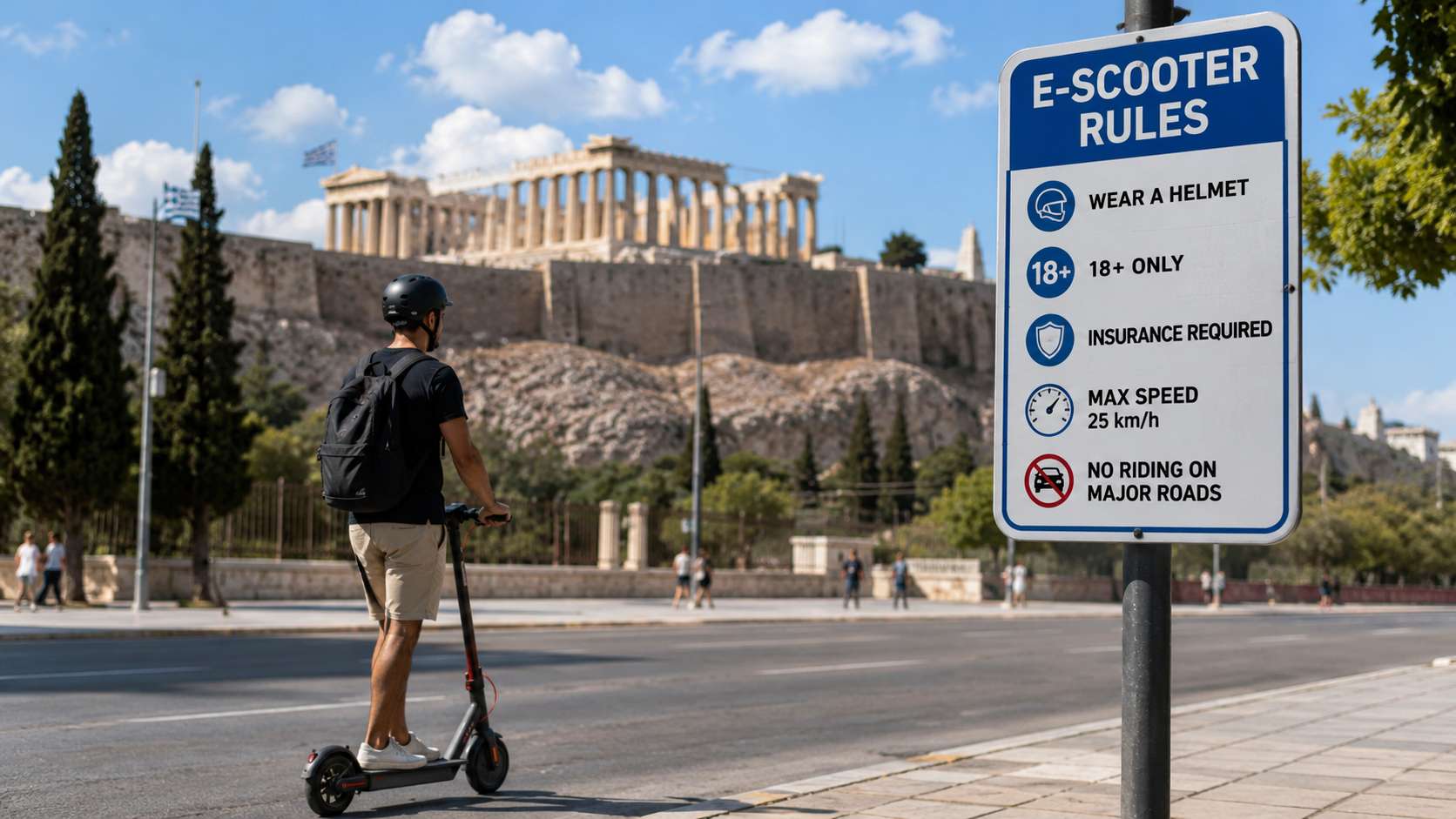
Greece e-scooter rules could soon become much stricter, and riders should pay attention now. Greek officials want to reduce crashes, stop unsafe riding, and bring more order to shared scooter services in busy cities and tourist areas.
The planned changes target a clear problem. E-scooters help people move through traffic, but careless riding has created safety concerns for pedestrians, drivers, and riders. In Athens and other crowded areas, scooters often mix with cars, buses, motorcycles, tourists, and people walking on narrow sidewalks. That mix can turn a short ride into a real risk.
The new proposal points to a bigger shift. Greece no longer treats electric scooters as simple leisure gadgets. Instead, the country wants riders and companies to treat them as real urban transport.
What Greece Wants to Change
Greek authorities plan to tighten the rules around private and shared electric scooters. The goal is simple: safer streets, clearer responsibility, and fewer blocked sidewalks.
The proposed rules include:
- A ban on e-scooter use for riders under 18
- Mandatory helmet use
- Mandatory insurance for riders and rental services
- A 25 km/h maximum speed limit
- Built-in speed limiters
- A special identification label for scooters
- A ban on e-scooters on major avenues
- A ban on roads with speed limits above 30 km/h
- Stronger local control over shared scooter fleets
- Better rules for scooter parking in public areas
These changes would affect daily commuters, tourists, delivery riders, rental companies, and private scooter owners. For many riders, the biggest change will come from helmets, insurance, and road limits.
Why Greece Is Pushing New E-Scooter Rules
E-scooters have become common in Athens, coastal cities, islands, and tourist zones. They offer cheap and fast transport for short trips. They also help people avoid traffic and parking stress.
Still, the growth came with problems. Some riders travel without helmets. Others ride on sidewalks, ignore traffic lights, carry passengers, or leave scooters across ramps and walkways. In crowded areas, that behavior puts everyone at risk.
The safety concern grows even more in tourist spots. Many visitors rent scooters without knowing local roads or traffic habits. Some treat the ride like a quick holiday activity. Yet a scooter can reach speeds that cause serious injuries in a crash.
That is why the Greece e-scooter crackdown matters. It could change how riders use scooters and how companies manage them.
The Under-18 Ban Could Have a Big Impact
The proposed ban for riders under 18 may become one of the most noticeable changes. Young riders often use scooters for short trips to school, parks, shops, or friends’ homes. Under the new plan, that would no longer be allowed.
Officials want to reduce risk among younger users. Traffic can change fast, and scooter riders need to judge speed, distance, road surface, parked cars, and pedestrian movement at the same time. Younger riders may not always make those decisions safely.
This rule also sends a clear message to parents. An e-scooter is not a toy. It moves fast, it shares space with vehicles, and it can cause harm during a fall or collision.
Helmets and Insurance Will Matter More
Helmet use sits near the center of the new safety plan. A helmet cannot prevent every injury, but it can reduce the risk of serious head trauma during a crash.
Many riders skip helmets on short trips. That habit creates danger, especially on uneven streets, wet roads, or busy intersections. A short ride can still end badly after one sudden brake or one pothole.
Insurance will also play a bigger role. If a scooter hits a pedestrian, scratches a car, or causes an injury, people need a clear way to handle damage and claims. Mandatory insurance could make that process less confusing.
Rental companies will likely face more pressure here. They may need to check users more carefully, explain rules better, and manage liability for their fleets.
Speed Limits and Road Restrictions
The planned 25 km/h speed limit keeps e-scooters within a controlled speed range. Speed limiters would make that rule easier to apply. Riders would no longer rely only on self-control or app warnings.
Road restrictions could change daily scooter routes even more. Under the plan, riders would avoid major avenues and roads with speed limits above 30 km/h. That means scooters would move toward calmer streets, cycling routes, and safer urban zones.
This change makes sense from a safety point of view. E-scooters do not mix well with fast cars, buses, or motorcycles. A small wheel, upright riding position, and limited rider protection make high-speed roads risky.
Still, cities will need better routes for micromobility. If riders cannot use fast roads, they need safe alternatives. Better bike lanes, clear signs, and marked scooter parking areas could make the new rules work better.
Shared Scooter Companies Could Face Tougher Control
Shared scooters bring convenience, but they also create street clutter. In Athens and tourist areas, rented scooters often appear near metro stations, hotels, squares, beaches, and shopping streets.
The new rules could give municipalities more control over these services. Local authorities may limit fleet sizes, define parking zones, and set stricter standards for operators.
Cities may also push companies to respond faster to complaints. For example, a scooter blocking a wheelchair ramp should not stay there for hours. A scooter parked across a narrow sidewalk creates a problem for parents, older pedestrians, and people with disabilities.
Better parking rules would make shared scooters easier to accept. People are more likely to support micromobility when it does not block public space.
What Riders Should Do Now
Riders do not need to wait for final rules to ride more safely. Good habits already match most of the proposed changes.
Before using an electric scooter in Greece, riders should:
- Wear a helmet every time
- Ride alone
- Avoid sidewalks where pedestrians walk
- Stay away from fast roads
- Follow traffic lights and road signs
- Keep both hands on the handlebars
- Avoid headphones in traffic
- Never ride after drinking alcohol
- Check brakes, lights, and tires before riding
- Park without blocking ramps, crossings, doors, or sidewalks
Tourists should take extra care. A rental app may unlock the scooter quickly, but the rider still needs to understand local rules. Busy roads, unfamiliar signs, and narrow streets can make a simple ride harder than expected.
What This Means for Athens and Greek Islands
Athens will likely feel these changes first. The city has heavy traffic, many pedestrians, old sidewalks, and strong demand for short-distance transport. Scooters can help there, but only with clear rules.
Greek islands may also see changes during peak travel months. Tourists often use scooters for beach trips, hotel transfers, and short rides through resort towns. The new rules could lead to more checks, clearer app warnings, and tighter rental controls.
For residents, the rules could make streets feel more predictable. For tourists, they could make scooter use safer and less confusing. For companies, they could raise operating costs, but also improve trust.
Greece Is Moving Toward Safer Micromobility
Electric scooters can still play a useful role in Greece. They reduce short car trips, help people move through traffic, and make city travel more flexible.
The problem comes from unsafe riding, weak parking habits, and unclear responsibility after accidents. Greece now wants to fix those gaps with stricter rules, stronger local control, and clearer limits.
Riders who already wear helmets, avoid fast roads, and park with care will adjust quickly. Riders who treat scooters like toys may face a harder change.
The message is clear: Greece wants e-scooters to stay useful, but it also wants them safer for everyone who shares the street.