

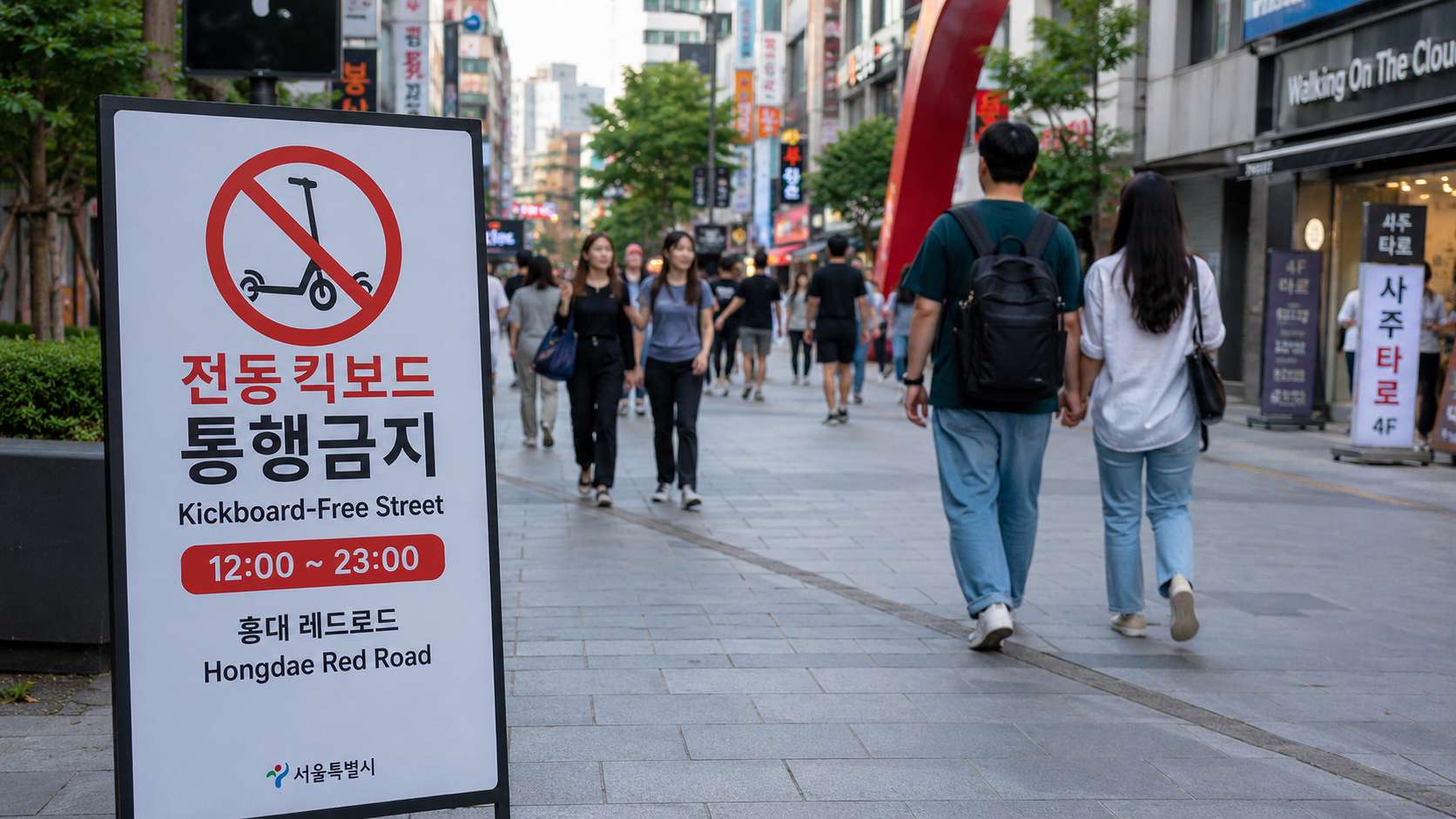
Seoul Gives Top Safety Award to Kickboard-Free Street Project
Seoul has named its “Kickboard-Free Street” project as the top proactive administration safety case for the first half of 2026. The decision puts a fresh spotlight on how large cities can manage electric scooters in crowded pedestrian areas without banning personal mobility across the whole city.
The project started in two busy areas: Hongdae Red Road in Mapo-gu and the Banpo private academy district in Seocho-gu. Both places see heavy foot traffic. So, Seoul focused on zones where fast-moving electric kickboards can create the biggest safety concerns.
For many people, the move will feel practical. Scooters can help with short trips, but they can also block sidewalks, crowd shop entrances, and surprise pedestrians in narrow walking spaces. So, the city chose a targeted rule instead of a broad restriction.
Why Seoul Created Kickboard-Free Streets
Electric kickboards have become common in Seoul, especially in areas with young riders, students, tourists, and commuters. They are easy to rent, quick to use, and useful for short-distance travel. Still, they create problems when riders use them in places designed mainly for walking.
For example, a busy shopping street can become harder to use when scooters pass between pedestrians. Then, parked devices can add another problem. They may block crossings, building entrances, bus stops, or sidewalk edges. For older pedestrians, children, and people with mobility challenges, that clutter can feel more than annoying. It can become a real barrier.
That is why Seoul tested a new street-level rule. Instead of treating every street the same way, the city picked high-risk areas where pedestrian safety needed stronger protection.
Where the Kickboard-Free Zones Apply
The first kickboard-free zones apply to:
- Hongdae Red Road in Mapo-gu
- Banpo private academy district in Seocho-gu
These areas were selected for a clear reason. Hongdae Red Road is a popular nightlife, culture, food, and shopping area. It draws large crowds throughout the day and evening. Banpo’s academy district, meanwhile, has many students, parents, and pedestrians moving around after school hours.
In these locations, the city restricted electric kickboards and related personal mobility devices during the main operating hours. That time-based rule keeps the policy focused. It targets the hours when the risk is higher, and it avoids a full-day restriction where it may not be needed.
Early Results Show Strong Public Support
Seoul’s pilot program gained strong public backing. In a city survey of 500 people who lived in or used the target areas, most respondents said they noticed clear changes after the restriction began.
According to the reported results:
- 76.2% said they noticed fewer electric kickboards passing through the streets
- 80.4% said they noticed fewer illegally parked devices
- 77.2% said the risk of collisions felt lower
- 69.2% said the walking environment had improved
- 98.4% supported expanding kickboard-free streets to other areas
Those numbers explain why the project received top safety recognition. The rule did not only sound good on paper. People using the streets noticed fewer scooters, less clutter, and a calmer walking space.
What This Means for Pedestrians
For pedestrians, the biggest gain is simple: more predictable walking space. A crowded street already requires attention. Add scooters into the mix, and people need to watch for riders, parked devices, shop signs, delivery bikes, and other obstacles at the same time.
So, kickboard-free streets can make daily movement feel safer. Parents walking with children get more room. Students leaving academy buildings face fewer moving devices. Older people have fewer obstacles to avoid. Tourists can move through crowded districts with less stress.
The policy also supports better sidewalk order. Even one scooter parked in the wrong place can block a narrow path. Ten scooters can turn a public walkway into a messy parking zone. By keeping these devices out of selected areas, Seoul can reduce both riding risk and parking problems.
What This Means for Riders
For riders, the rule adds a new responsibility. They need to check signs, avoid restricted streets, and use nearby routes instead. That may feel inconvenient for some users, especially in busy districts where scooters are popular.
Still, the rule does not remove electric scooters from Seoul. It only limits them in selected high-footfall areas. In practice, riders can still use personal mobility devices on approved roads and routes outside those zones.
This balanced model may become more common. Cities want short-distance mobility, but they also need safe sidewalks. The same debate appears in many places, from Seoul’s kickboard-free streets to changing scooter policies in Europe. Riders can see a similar safety discussion in this guide about London e-scooter rules extended, which shows how other major cities are still testing the right balance.
Why Other Cities May Follow Seoul
Seoul’s project could interest other local governments for one key reason: it is targeted. A full scooter ban can be hard to support, especially when many people rely on micromobility for short trips. A narrow rule for crowded streets is easier to explain.
First, it protects pedestrians in the places that need it most. Next, it gives riders clear boundaries. Then, it helps scooter companies understand where parking and riding controls must be stricter.
For cities with busy shopping streets, school zones, tourist areas, and nightlife districts, this type of rule may offer a workable model. It does not reject electric scooters completely. Instead, it says that some streets should remain mainly for walking.
A Bigger Shift in Scooter Safety Rules
Seoul’s decision reflects a wider shift in urban transport policy. Early scooter rules often focused on access, convenience, and app-based rentals. Now, cities are paying closer attention to street safety, sidewalk space, and parking control.
That shift makes sense. Electric scooters can reduce short car trips. They can connect people to subway stations and bus stops. Plus, they can help people move faster across dense neighborhoods. Yet they only work well when riders follow rules and when parking does not damage public space.
For that reason, Seoul’s kickboard-free street project sends a clear message. Micromobility still has a role, but pedestrian safety comes first in the busiest walking zones.
Seoul’s Safety Case Could Shape Future Scooter Rules
Seoul’s top award for the Kickboard-Free Street project gives the policy more public attention. It also gives other cities a real example to study.
The main lesson is clear. A city does not need to choose between scooters and pedestrians everywhere. It can protect the most crowded streets first, then adjust the rules based on public feedback and safety results.
For Seoul, the project has already shown strong support. For pedestrians, it brings calmer sidewalks. For riders, it creates clearer limits. For scooter companies, it sets a higher standard for street management.
So, the future of electric scooters in dense cities may not be a simple yes or no. It may depend on where people ride, where they park, and how well each street serves the people walking through it.