

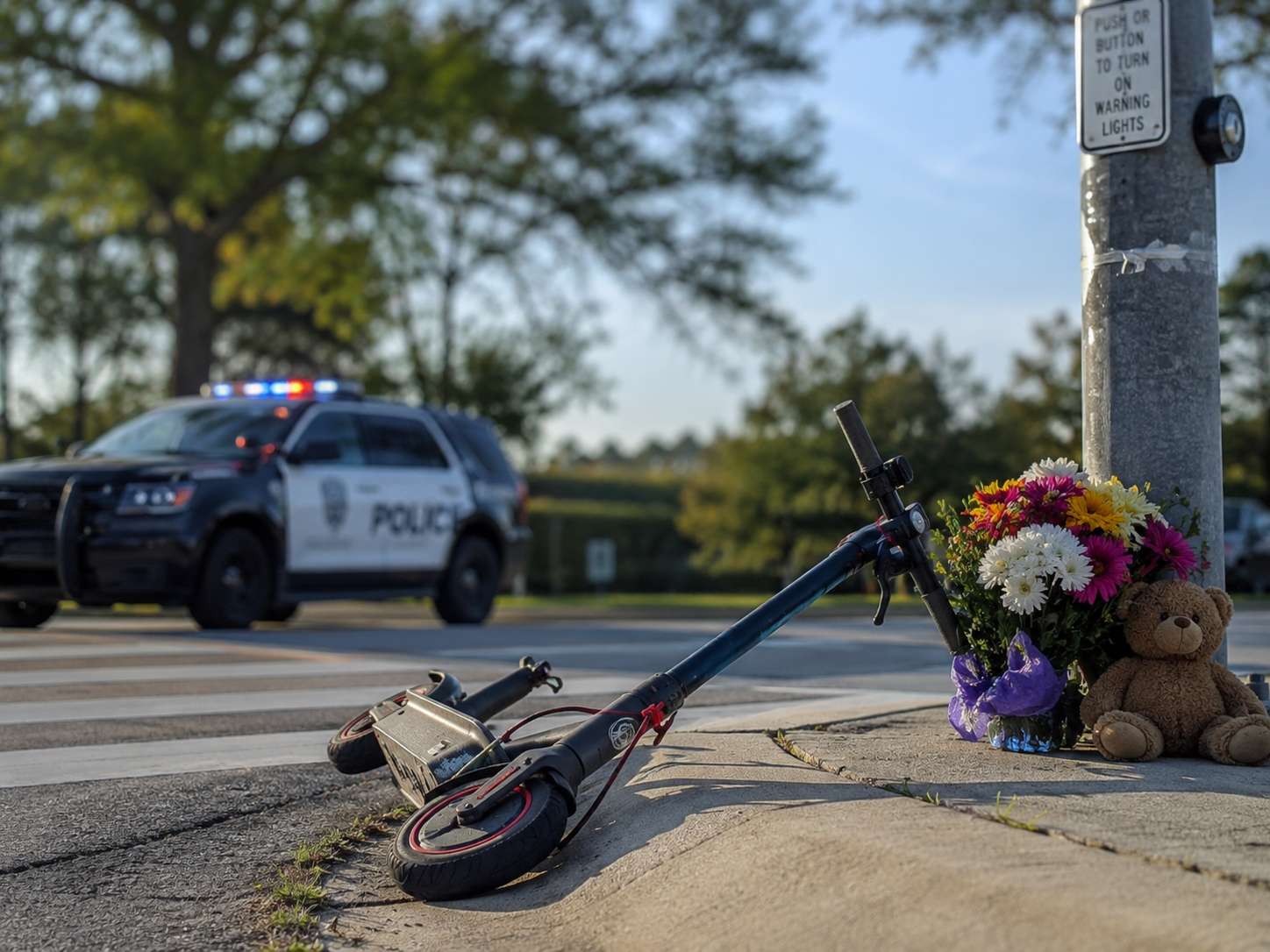
Orange County leaders plan to take a closer look at e-bike and e-scooter safety after the death of 13-year-old Colton Remsburg, a Lake Nona student who died after an electric scooter crash.
The crash happened on May 10, 2026, on Moss Park Road near Savannah Pines Drive in the Lake Nona area. Colton had been riding his electric scooter to buy flowers for his mother on Mother’s Day. A pickup truck struck him, and he suffered severe injuries. He died on May 13.
His death has left families across Orange County asking a difficult question: are local e-bike and e-scooter rules strong enough for young riders?
County commissioners now plan to discuss safer use of electric bikes, electric scooters, and other small electric vehicles. The conversation comes at a time when more children and teens use these devices for short trips, school routes, and neighborhood travel.
Why Orange County Is Reviewing E-Bike and E-Scooter Safety
Electric scooters and e-bikes have become common on neighborhood streets, sidewalks, trails, and school routes. Many families like them since they cost less than cars, need little storage space, and help riders cover short distances fast.
Yet speed changes the risk. A child on a regular bike often moves slower than a teen on a powered scooter or e-bike. Drivers may not expect a young rider to enter a road or crosswalk quickly. That gap can create dangerous moments, mainly near busy roads, driveways, and intersections.
Colton’s crash has made the issue feel urgent. Local leaders had already shown interest in micromobility safety, but this tragedy has brought more attention to age rules, helmet use, speed limits, and safer road design.
The county discussion may not focus on one single rule. Instead, commissioners may look at a mix of education, enforcement, and clearer local guidance.
What New Rules May Include
Orange County has not approved a final rule package yet. Still, several topics may come up during the safety review.
Possible e-bike and e-scooter safety steps include:
- Helmet rules for younger riders
- Minimum age limits for certain electric scooters and e-bikes
- Speed limits on sidewalks, trails, and shared paths
- Clear rules for riding near pedestrians
- Better signs near schools, parks, and busy crossings
- Safety lessons for students and parents
- More enforcement for reckless riding
- Lighting and reflector rules for evening rides
- Guidance for families buying higher-speed devices
These ideas all point to the same goal. Riders need rules they can understand, and parents need better information before they buy electric devices for children.
A small scooter may look simple, but some models can move quickly. A fast e-bike may look like a regular bicycle, yet it can reach speeds that demand more skill, more space, and stronger judgment.
Why Device Type Matters
Not all electric bikes and scooters carry the same risk. A low-speed scooter used on a quiet path differs from a high-powered e-bike used near traffic.
Florida recognizes different classes of electric bikes. Class 1 and Class 2 e-bikes assist up to 20 mph. Class 3 e-bikes assist up to 28 mph. Some electric devices go beyond those limits or use features that place them outside normal e-bike categories.
That difference matters for parents. A product listing may call a device an e-bike, but that does not mean a young rider should use it on any sidewalk, trail, or road. Families should check the top speed, motor power, throttle style, brake quality, and local rules.
Electric scooters bring their own safety concerns. They feel easy to ride at first, but they have small wheels and a narrow deck. Bumps, curbs, wet pavement, and sudden turns can cause falls. Near traffic, the risk rises fast.
Florida’s Wider Push on Micromobility Safety
The Orange County discussion also connects to the wider debate over e-bike and e-scooter safety in Florida. State lawmakers have looked at new rules for electric bicycles, sidewalk riding, crash reporting, and public education.
One recent example is the Florida e-bike safety bill 2026, which could shape how local governments, families, and riders think about micromobility safety. The bill discussion has placed more focus on speed, rider behavior, and safer use around pedestrians.
For Orange County, the state debate adds more pressure to act with care. Local rules must work with Florida law, but they also need to match real traffic conditions in places like Lake Nona, Orlando, Winter Garden, Apopka, and other growing communities.
What Parents Can Do Right Now
Families do not need to wait for new county rules before making safer choices.
Before a child rides an electric scooter or e-bike, parents should check:
- How fast the device can go
- Whether the child can control it safely
- Whether the route includes busy roads
- The quality of the brakes and tires
- Helmet fit and helmet rating
- Lights, reflectors, and visibility
- Local rules for sidewalks, trails, and roads
- The child’s understanding of traffic signs and crossings
Parents should also ride the route with their child first. This simple step can show risky crossings, blind corners, fast traffic, and areas with no safe shoulder or bike lane.
A helmet cannot stop every injury, but it can reduce the risk of serious head trauma. Bright clothing, front and rear lights, and slower riding near cars can also help.
Drivers Also Have a Role
The safety discussion should not place all responsibility on children. Drivers share the road with riders of many ages and skill levels.
Motorists should slow down near schools, parks, trails, and residential streets. They should watch for young riders near crosswalks and driveways. A child on an e-scooter can move faster than expected, so drivers need more space and more patience.
Parents, riders, and drivers all play a part. Still, road design matters too. Wide roads, long crossings, and high-speed traffic can make small electric vehicles more dangerous. Better signs, protected paths, and safer school routes can reduce conflict before it happens.
A Local Tragedy May Lead to Stronger Safety Rules
Colton Remsburg’s death has shaken the Lake Nona community. He was only 13, and his ride had a simple purpose: buying flowers for his mother.
Now, Orange County leaders face a serious decision. They must decide how to protect young riders without ignoring the fact that e-bikes and e-scooters have become part of daily travel.
The strongest plan will likely combine several steps. Clear age guidance, lower speeds in shared spaces, better helmet education, safer routes, and stronger public awareness can work together. One rule alone will not fix the problem.
For families, the message is direct. Electric bikes and scooters are not toys once they enter traffic. They need care, training, and respect. For Orange County, the next discussion may shape how thousands of young riders use these devices in the years ahead.